A hedge trimmer can struggle with woody growth even when a branch appears to fit within its advertised cutting capacity. Clean cuts depend on more than maximum diameter: blade sharpness and tooth spacing, the branch’s position in the blade, the tool’s power, and the condition of the wood all affect the result. Use the manufacturer’s capacity as a limit—not a promise of smooth, effortless cutting.
Reviews · Mon Sep 21
Cut quality on woody growth reviewers skip
A hedge trimmer’s advertised cutting capacity does not guarantee clean cuts on woody growth. Blade condition, tooth spacing, branch position, and the tool’s limits all matter.
What affects cuts on woody stems
Blade sharpness and tooth spacing
Dull or damaged blades may snag, crush, or leave ragged ends instead of shearing cleanly. Tooth spacing also matters: a stem that does not sit securely between the cutting teeth may be pushed or skipped rather than cut. Look for reviews or product details that explain blade design and performance on actual woody stems, not just soft new growth.
Keep blades clean and lubricated as directed by the manufacturer. If cleaning and lubrication do not resolve poor cutting, inspect for damage or have the blade serviced. Do not try to sharpen a blade unless the manufacturer permits it and you can follow the specified procedure.
Branch diameter and position
A listed maximum cutting diameter is usually a boundary, not an indication that the trimmer will cut every stem of that size cleanly. Stems near the limit may require more time, may not fit well between the teeth, or may be unsuitable for the tool altogether. A branch near the blade tip can also behave differently from one held securely closer to the blade’s cutting area.
Check the manual for the permitted branch size and cutting technique. If the stem exceeds the stated limit, do not force it through the blades.
Wood condition and tool power
Hard, dry, or dense stems can be more difficult to cut than thin, flexible growth of the same diameter. Battery charge, battery condition, and the trimmer’s power system can also affect cutting performance. A trimmer that handles routine hedge trimming well may still be the wrong tool for frequent work on thick, woody branches.
Replacement blades when the original blade is worn or damaged
 Black & Decker OEM N815256 Hedge Trimmer Blade Assembly DCHT820P1 DCHT820BBLACK+DECKER
$76.80 as of
View on Amazon 9.1inch Hedge Trimmer Blade Max Cutting Length9.1inch (230mm) Suitable for Nicklaua Green Hedge Trimmer, Includes…Nicklaua
$8.09 as of
View on Amazon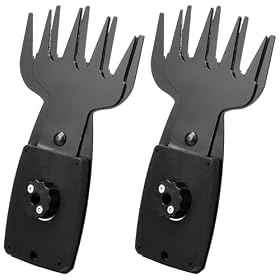 2 Pack 302348001 Hedge Trimmer Grass Shear Blade AssemblyBERPSE
$28.99 as of
View on Amazon
Product prices and availability are accurate as of the date/time indicated and are subject to change. Any price and availability information displayed on Amazon.com at the time of purchase will apply to the purchase of this product.
How to judge cut-quality claims
When comparing reviews, look for details that help explain the result:
- What was cut: woody, established stems are a more useful comparison than soft new shoots.
- How large the stems were: diameter and whether the branches were within the manufacturer’s stated limit.
- The condition of the blade: a dull or damaged blade can make a capable trimmer seem ineffective.
- The result: clean cuts, repeated passes, snagging, or crushed ends tell you more than a general claim that a tool is powerful.
- The cutting setup: whether the trimmer could hold the branch between its teeth without forcing or twisting the tool.
Treat a review as limited evidence if it does not say what kind of growth was cut or how thick it was. Avoid comparing cut-quality claims across trimmers as if they were controlled tests; blade condition, wood type, and technique can differ.
A hedge trimmer rated for frequent woody-stem trimming
 BLACK+DECKER 20V MAX Cordless Hedge Trimmer, Battery and Charger Included, 22 Inch Steel Blade Lightweight…BLACK+DECKER
$79.00 as of
View on Amazon LINKOceans Loppers for Tree Trimming with Compound Action, 30 Inch Tree Trimmer, Thick Branch Cutter…LINKOceans
$24.98 as of
View on Amazon BLACK+DECKER 20V MAX Pole Hedge Trimmer Cordless with Battery and Charger, 18-Inch Dual Action Blade…BLACK+DECKER
$139.00 as of
View on Amazon
Product prices and availability are accurate as of the date/time indicated and are subject to change. Any price and availability information displayed on Amazon.com at the time of purchase will apply to the purchase of this product.
When to choose another tool
For occasional stems that are beyond a hedge trimmer’s stated capacity, use a tool intended for that size of branch, such as hand pruners or a pruning saw when appropriate. If much of the hedge consists of thick woody growth, choose a trimmer whose manufacturer explicitly allows the stem size and type you need to cut. Do not rely on motor power or a long blade to overcome a capacity limit.
Before trimming, check for hidden wire, fencing, or other obstructions, and keep hands and other body parts away from the blades. Follow the manual for protective equipment, safe handling, and clearing jams. Disconnect the power source or remove the battery before inspecting or cleaning the blade. If the tool repeatedly stalls, binds, or leaves poor cuts on growth within its stated limits, stop using it and check the blade, setup, and manufacturer guidance before continuing.
FAQ
Does a hedge trimmer’s maximum cutting diameter guarantee clean cuts?
No. It is a stated limit, not a guarantee of clean or easy cutting in every condition. Blade sharpness, tooth spacing, wood type, and branch position can all affect the result.
Why does my hedge trimmer leave ragged cuts on woody stems?
Common causes include dull or damaged blades, stems that do not sit properly between the teeth, growth that is too thick or dense, or a low battery. Check the manual’s cutting limits and inspect the blade with the power source disconnected.
Should I force a thick branch through the hedge-trimmer blades?
No. If the branch exceeds the manufacturer’s stated capacity or the blades bind, stop and use a tool intended for that size of branch.