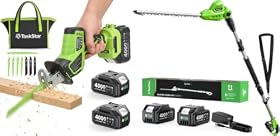
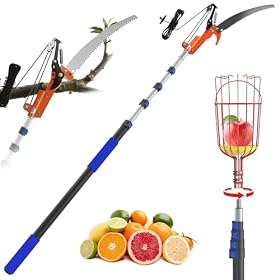
Best pole trimmer for a slope where a ladder is unsafe
The best pole trimmer for a slope is not necessarily the longest one. Look for a manageable tool with enough reach, a usable cutting angle, a blade gap suited to your hedge, and controls you can operate while keeping both feet stable.
A pole hedge trimmer can help maintain a tall hedge on sloped ground without climbing a ladder, but it does not make unstable footing safe. The best choice is a relatively light, well-balanced trimmer with enough reach to keep you on firm ground, an adjustable cutting head, and a blade gap that matches the hedge branches. If you cannot stand securely, control the tool, or move without slipping, stop and use a qualified professional instead.
What to look for first
Enough reach without excessive length
Choose a shaft length that lets you reach the hedge from stable ground rather than stretching overhead. A longer pole can reduce ladder use, but it also increases leverage, weight, and difficulty controlling the blade.
The advertised reach may include your arm height and the angled cutting head, so it is not the same as the physical shaft length. Check the manufacturer’s reach measurement and compare it with the height of the hedge and the distance between your safe standing position and the branches.
A tool that is slightly shorter but easier to control is often a better choice than the longest available model, particularly when working across a slope.
Low weight and good balance
Weight becomes more noticeable as the pole gets longer. The cutting head is held far from your body, which makes the tool feel heavier than its listed weight suggests.
Prioritize:
A manageable total weight with the battery installed, if it is cordless
A shaft that does not flex excessively during normal use
Controls that remain reachable without changing your grip dangerously
A shoulder strap or support harness if the manufacturer provides or recommends one
A balance point that does not force the cutting head sharply downward or upward
If possible, handle the assembled tool before buying. A product’s listed weight does not fully describe how tiring it will feel at full extension.
An adjustable cutting head
A pivoting head makes it easier to trim the top and sides of a hedge from a slope. It can also help you keep the blade aligned with the hedge instead of twisting your wrists or leaning your body.
Look for a head with clearly defined locking positions. Avoid relying on a head that can move unexpectedly while cutting. Follow the manufacturer’s instructions for adjusting or locking the head, and switch the tool off before making adjustments unless the instructions specifically state otherwise.
Match the blade to the hedge
Blade length
A longer blade can cover more hedge with each pass, but it adds weight at the end of the pole and may be harder to control on uneven ground. A shorter blade is usually easier to guide around corners, narrow sections, and individual branches.
For a sloped site, choose the shortest blade that can reach across the hedge efficiently. The goal is controlled cutting rather than maximum coverage per pass.
Tooth gap and branch thickness
The blade’s tooth gap indicates the approximate range of branch sizes it is intended to handle, but the manufacturer’s instructions take priority. A small gap may suit routine trimming of fine new growth, while thicker or woody branches may require a larger gap or a separate saw designed for that work.
Do not force a pole hedge trimmer through branches beyond its stated capacity. Stop and use hand pruners, loppers, or an appropriate pruning saw when branches are too thick. A hedge trimmer is not a substitute for a pole saw unless the manufacturer specifically describes the tool for that purpose.
Product prices and availability are accurate as of the date/time indicated and are subject to change. Any price and availability information displayed on Amazon.com at the time of purchase will apply to the purchase of this product.
Choose the power source for the slope
Cordless models
A battery-powered pole trimmer avoids dragging a power cord across a slope. That reduces one important trip hazard and usually makes positioning easier.
Check:
Whether the battery and charger are included or sold separately
The manufacturer’s stated runtime for hedge trimming
The weight of the battery installed on the tool
Whether a replacement battery is available
Whether the battery platform is compatible with other tools you already own
Runtime depends on branch thickness, cutting technique, temperature, battery condition, and how continuously the tool is used. For a large hedge, a second compatible battery may be more useful than choosing a heavier model with a longer blade.
Corded models
A corded trimmer may provide continuous operation, but the cord can snag, slide downhill, or enter the cutting area. If you use one, follow the manufacturer’s outdoor extension-cord requirements and use a properly protected outdoor electrical connection. Keep the cord behind you and away from the blade at all times.
Do not use a corded tool where the cable forces you to stand in an unstable position. A ground-fault circuit interrupter, commonly called a GFCI, is generally important for outdoor corded equipment, but it does not eliminate the need to follow local electrical requirements and the tool manual.
Gas-powered models
Gas-powered tools can offer long operating time with fuel changes, but they are typically heavier and require fuel handling, engine maintenance, and ventilation precautions. Extra weight at the end of a long shaft can be a serious disadvantage on a slope. Consider this power source only if you can control the fully fueled tool safely and its maintenance requirements fit your needs.
Product prices and availability are accurate as of the date/time indicated and are subject to change. Any price and availability information displayed on Amazon.com at the time of purchase will apply to the purchase of this product.
Slope-specific safety considerations
A pole trimmer reduces the need to climb, but it introduces other risks. The blade is elevated, the tool can pull or twist when it contacts a branch, and a long shaft can shift your balance.
Use these precautions:
Work only when the ground is dry enough for secure footing.
Wear slip-resistant footwear appropriate for the terrain.
Keep both feet planted before starting each cut.
Do not lean downhill, reach sideways, or work from the edge of a drop-off.
Keep bystanders, children, pets, and anyone downhill away from the work area.
Watch for hidden wire, fencing, rocks, irrigation lines, and other obstructions.
Keep the blade away from your legs and never carry the running tool between work areas.
Stop the motor and remove the battery or disconnect the power source before clearing a jam, cleaning the blade, or making adjustments.
Wear eye protection, hearing protection, gloves, sturdy footwear, and any additional protective equipment required by the manual.
Never stand on a ladder, platform, roof, retaining wall, or improvised surface while operating a pole hedge trimmer. If the pole is still too short from safe ground, the hedge may need professional equipment or professional service rather than a longer handheld tool.
Product prices and availability are accurate as of the date/time indicated and are subject to change. Any price and availability information displayed on Amazon.com at the time of purchase will apply to the purchase of this product.
A practical buying checklist
Before choosing a pole trimmer, confirm the following:
Safe working position: Can you reach the hedge while standing on firm, level-enough ground?
Total weight: Is the listed weight measured with the battery, cutting attachment, and other operating components installed?
Working reach: Does the manufacturer’s reach specification cover the hedge without overhead stretching?
Head adjustment: Does the cutting head lock securely at useful angles?
Blade gap: Is it appropriate for the hedge’s normal branch thickness?
Shaft design: Is the pole fixed, telescoping, or fitted with removable sections? A telescoping shaft may adjust quickly, while a fixed shaft can be simpler and more rigid; follow the manufacturer’s setup limits.
Power setup: Are the battery, charger, extension cord, or fuel components included as needed?
Support equipment: Is a shoulder strap supplied or approved for that model?
Serviceability: Are replacement blades, batteries, and other wear parts available?
Manual warnings: Does the manufacturer specifically permit the intended angle, attachment, and operating position?
Product prices and availability are accurate as of the date/time indicated and are subject to change. Any price and availability information displayed on Amazon.com at the time of purchase will apply to the purchase of this product.
When a different tool is better
A pole hedge trimmer is appropriate for maintaining hedge growth within its blade capacity. It is not the best tool for large limbs, storm damage, heavily overgrown shrubs, or cutting from unstable terrain.
Use hand pruners or loppers for reachable individual branches. Use a pruning saw designed for the task when branches exceed the trimmer’s capacity. If the hedge is tall enough that you must work near a drop-off, cannot keep both feet stable, or cannot see the blade and surrounding area clearly, hire a qualified landscaper or arborist.
Maintenance that matters on a pole trimmer
A clean, lubricated blade generally cuts more predictably than a dirty or dry one. After disconnecting the power source, remove plant debris according to the manual, inspect the teeth and fasteners, and apply only the lubricant specified or permitted by the manufacturer.
Before each use, check the shaft locks, cutting-head adjustment, guards, trigger controls, battery connection or cord, and signs of damage. Do not operate the tool if the shaft is cracked, the head will not lock, the safety control fails, or the blade is bent or excessively damaged.
A replacement blade or other approved part is reasonable when the cutting attachment is worn but the rest of the tool remains sound. Replacing the entire trimmer may make more sense when the motor or battery system is failing, replacement parts are unavailable, or the tool remains too heavy or short for safe work on your slope.
FAQ
Is a pole hedge trimmer safe to use on a slope?
Only if you can keep both feet on firm, stable ground, maintain control of the tool, and keep clear of drop-offs and people downhill. A pole trimmer does not make slippery or unstable terrain safe. Hire a qualified professional if you cannot establish a secure working position.
How long should a pole trimmer be for a tall hedge on a slope?
Choose enough reach to cut from stable ground without stretching, but avoid buying the longest tool automatically. Longer poles increase leverage and fatigue. Check the manufacturer’s stated reach rather than assuming shaft length equals working height.
Is a cordless pole trimmer better than a corded model for a slope?
Cordless models usually avoid the trip and snag hazards associated with an extension cord. Compare the complete operating weight, runtime, battery availability, and charging needs. A corded model can work where a cable can be managed safely, but the cord must remain away from the blade and your feet.
Can a pole hedge trimmer cut thick branches?
Only within the branch size and tooth-gap limits specified by the manufacturer. Larger woody branches may require loppers or a pruning saw. Do not force the hedge trimmer through oversized branches.
Should I use a ladder with a pole hedge trimmer?
No. Do not operate a pole hedge trimmer from a ladder or improvised elevated platform. If the hedge cannot be reached safely from the ground, use professional equipment or hire a qualified professional.