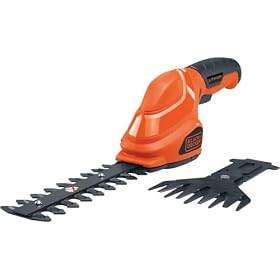
A handheld hedge trimmer and step ladder can be more precise for close work, while a pole trimmer improves reach from the ground. Choose based on hedge height, thickness, shape, and how often you need to reposition.
Step ladder plus handheld versus a pole trimmer
For most tall-hedge jobs, a pole hedge trimmer is the safer and more convenient alternative to carrying a handheld trimmer up a ladder. However, a handheld model used from the ground—or from a properly positioned platform for limited, low-risk work—usually offers better control, easier handling, and cleaner shaping. The right choice depends on hedge height, branch thickness, hedge depth, and how precisely you need to trim.
Quick comparison
Factor
Step ladder plus handheld trimmer
Pole hedge trimmer
Reach
Depends on ladder height and your working position
Adds reach while you remain on the ground
Control
Usually better; handheld tools are easier to guide
Can feel heavier and less precise at full extension
Safety
Ladder introduces fall and balance risks
Avoids most ladder use, but the extended tool still needs careful control
Shaping accuracy
Best for detailed, close-range work
Good for broad sides and hedge tops, less convenient for fine shaping
Repositioning
Ladder must be moved often
Usually faster for long, continuous sections
Weight and fatigue
Lower tool weight, but climbing and repositioning add effort
More leverage and reach can make arms, shoulders, and back tire quickly
Storage and cost
Requires a suitable ladder plus handheld trimmer
Requires a pole trimmer, often with a longer or adjustable shaft
When a handheld trimmer and step ladder make sense
A handheld hedge trimmer is usually the better choice when the hedge is within comfortable ground reach or when you need close control over its shape. It can be easier to keep the blade parallel to a hedge face and easier to maneuver around corners, branches, fences, and garden features.
This setup may also make sense when:
The hedge is only slightly taller than your standing reach.
You are trimming short sections rather than an entire long hedge.
The hedge has an intricate shape that requires frequent angle changes.
You already own a suitable handheld trimmer and only occasionally need extra height.
The hedge contains mixed growth that requires careful positioning.
A step ladder does not automatically make a handheld trimmer a safe high-reach tool. The ladder must stand on firm, level ground, and you should follow the ladder manufacturer’s instructions. Do not stand on the top step or top cap, overreach sideways, or operate in a position where the trimmer could pull you off balance. Move the ladder instead of leaning beyond its safe working area.
If the hedge requires repeated climbing, stretching, or reaching over your shoulder, the ladder-and-handheld approach is usually the wrong setup even if it produces good cutting control.
Product prices and availability are accurate as of the date/time indicated and are subject to change. Any price and availability information displayed on Amazon.com at the time of purchase will apply to the purchase of this product.
When a pole trimmer is the better choice
A pole hedge trimmer is generally preferable when the hedge top or upper side cannot be reached comfortably from the ground. It lets you work from a stable surface and reduces the need to climb, although it does not eliminate all safety risks.
The hedge is tall enough that ladder work would be frequent.
You need to trim a long, continuous top edge.
The hedge is set behind a border, wall, or planting bed that makes ladder placement difficult.
You want to maintain the hedge from the ground during routine trimming.
You are comfortable trading some precision for extra reach.
Pole trimmers are not necessarily easier in every respect. The shaft increases leverage, and the cutting head may be harder to position accurately. Holding the tool overhead for long periods can cause fatigue, particularly with heavier gas-powered or large-battery models. An adjustable cutting head can help with hedge tops and angled sides, but it may also add weight or complexity.
Keep the blade away from people, pets, windows, fences, and overhead utility lines. Follow the manufacturer’s instructions for the maximum working angle and extension length. If branches are too thick for the trimmer’s stated cutting capacity, stop and use the appropriate pruning tool instead.
Product prices and availability are accurate as of the date/time indicated and are subject to change. Any price and availability information displayed on Amazon.com at the time of purchase will apply to the purchase of this product.
Reach is more important than maximum tool length
A product’s advertised reach is not the same as the height you can comfortably trim. Your usable reach depends on:
Your own height and arm length.
The trimmer’s shaft or blade length.
The angle of the cutting head.
The hedge’s distance from your feet.
How much force is needed to cut the growth.
How long you can hold the tool without losing control.
A pole trimmer that technically reaches the hedge may still be awkward if you must hold it at full extension. For routine maintenance, leave some margin between the tool’s maximum reach and the hedge’s height. That margin allows you to keep a better posture and reposition without stretching.
For a handheld trimmer, consider the ladder height only after checking whether the hedge can be reached from the ground. A ladder adds setup time and creates a new fall hazard for every section you trim.
Cutting performance and branch thickness
Neither a handheld nor a pole design automatically cuts thicker branches. Cutting ability depends on the trimmer’s blade spacing, motor or engine output, and the manufacturer’s stated maximum cutting capacity. Use that specification as a guide, not as a reason to force the blade through oversized wood.
A handheld model often feels stronger and easier to control because its weight is closer to your body. That can help when working through dense growth or making precise passes. A pole model may cut the same material, but its extended shaft can make the tool feel less balanced.
For old, woody stems or branches beyond the trimmer’s stated capacity, use hand pruners, loppers, or a saw suitable for the branch size. Turn the trimmer off and follow the manufacturer’s procedure before clearing a jam.
Which setup is easier on your body?
The ladder-and-handheld combination shifts the main burden toward climbing, balancing, and repeatedly moving the ladder. The pole trimmer shifts more of the burden to your shoulders, arms, and back because the tool is held farther from your body.
A handheld trimmer is usually less tiring for detailed work close to your torso. A pole trimmer can be less tiring overall when it avoids many ladder moves, but only if its weight and balance suit you.
Before buying, pay attention to:
Total tool weight with the battery installed, if applicable.
Whether the shaft length is fixed or adjustable.
Handle position and whether a support strap is included or recommended.
Head adjustment range.
Battery placement, because a rear-heavy or front-heavy tool changes balance.
Whether the tool can be transported and stored conveniently.
If possible, compare the tool’s balance in the position you will actually use it. A low listed weight does not guarantee low fatigue if the cutting head creates substantial leverage.
Precision and hedge shape
Use a handheld trimmer when the finished appearance matters more than speed. It is easier to make small corrections around corners, taper the top, and keep the blade aligned with the hedge face.
A pole trimmer is effective for maintaining broad, flat surfaces, especially on tall hedges that are already shaped. It can be less convenient for detailed topiary, narrow gaps, or uneven sections where you need to see the blade closely.
For a tapered hedge, keep the base slightly wider than the top so lower growth receives adequate light. Work in controlled passes rather than sweeping rapidly through the foliage. Stop periodically to check the overall line from a distance.
Safety checks before either setup
Regardless of the tool type:
Read the trimmer and battery or engine instructions before use.
Wear eye protection, hearing protection where appropriate, sturdy footwear, and clothing that will not catch on the tool.
Inspect the blade, guard, handles, power cord if present, and safety switch.
Remove loose branches, wire, and other objects from the hedge area.
Keep bystanders and pets away from the work zone.
Do not trim in wet conditions unless the manufacturer specifically permits it.
Stop the motor and disconnect the battery, unplug the tool, or follow the engine shutoff procedure before clearing debris or adjusting the head.
Look for overhead electrical lines before extending a pole or placing a ladder.
For any ladder work, use a ladder that is rated and positioned for the task. Never use a ladder on uneven or slippery ground, and do not carry out high-reach trimming if you cannot maintain stable footing and control.
A practical decision rule
Choose a handheld hedge trimmer if the hedge is reachable from the ground, or if you need maximum control for shaping and detail. Use a ladder only for limited work that can be completed without overreaching and in accordance with the ladder instructions.
Choose a pole hedge trimmer if the hedge is tall, long, or difficult to access with a ladder. Select a model with enough practical reach—not merely the longest advertised reach—and a weight and balance you can control for the whole job.
If the hedge is both very tall and very dense, consider hiring a qualified landscaping professional rather than choosing between an awkward ladder setup and an exhausting extended tool. The safest option is the one that lets you keep stable footing, a clear view, and full control of the cutting head.
FAQ
Is a pole hedge trimmer safer than using a handheld trimmer on a ladder?
It can be safer because it lets you remain on the ground, but it still requires careful handling. Keep the tool under control, avoid overhead power lines, follow the manufacturer’s reach and angle instructions, and stop if fatigue affects your grip or balance.
Can a pole hedge trimmer replace a handheld hedge trimmer?
Not always. A pole trimmer is useful for tall hedges and broad surfaces, while a handheld model is usually easier for close shaping, corners, and detailed work. Some properties benefit from having both types.
Should I use a ladder with a pole hedge trimmer?
Usually not. The purpose of a pole trimmer is to provide ground-level reach, and using it from a ladder can make the extended tool harder to control. Follow the manufacturer’s instructions and use a qualified professional for work that cannot be completed safely from the ground.
What matters most when choosing a pole hedge trimmer?
Prioritize practical reach, total weight, balance, adjustable head positions, blade capacity, and runtime or fuel requirements. A longer tool is not automatically better if it becomes too heavy or difficult to control.