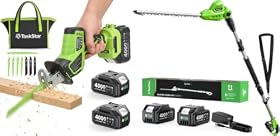
A mixed laurel hedge usually needs more than a light-duty trimmer. Match the blade gap to the thickest stems, then choose between cordless, corded, and gas power based on hedge length, access, and cutting frequency.
A mixed laurel hedge is easiest to maintain with a hedge trimmer that can handle the thickest branches without being unnecessarily heavy. For most established hedges, prioritize a blade gap of around 20–30 mm, adequate power, comfortable handling, and a blade length suited to the hedge’s width. If the hedge contains old woody stems larger than the trimmer’s rated capacity, use loppers or a pruning saw instead of forcing the trimmer through them.
What to look for
Blade gap and cutting capacity
The blade gap is the distance between the cutting teeth. It is one of the most important specifications for a mixed laurel hedge because laurel produces both soft new growth and harder woody stems.
Around 16–20 mm: Suitable for frequent trimming of young, flexible growth and smaller laurel hedges.
Around 20–25 mm: A practical middle range for many established residential hedges.
Around 26–30 mm: Better suited to thicker, less regularly maintained growth, provided the manufacturer rates the trimmer for that material.
Do not treat the blade-gap number as a guarantee that the tool can cut every branch of that diameter. Cutting performance also depends on motor power, tooth design, branch hardness, battery condition, and whether the branch is caught near the blade base or tip.
For thick branches, stop and switch to hand pruners, loppers, or a pruning saw. A hedge trimmer is intended mainly for repeated trimming, not for clearing large woody limbs.
Blade length
A longer blade can cover more hedge with each pass and help produce a straighter face. It can also make the tool heavier and harder to control, especially when trimming the top or working at shoulder height.
Choose a shorter blade when the hedge is narrow, shaped, or close to walls and fences.
Choose a medium-length blade for general residential hedges and a balance of reach and maneuverability.
Choose a longer blade when the hedge is broad and you can comfortably control the added weight.
Blade length does not replace reach. If the top of the hedge cannot be reached safely from the ground, use a model designed for extended reach or a suitable pole hedge trimmer rather than stretching from a ladder.
Choosing the power source
Cordless hedge trimmer
A cordless model is often the most convenient choice for a mixed laurel hedge around a typical home. It avoids dragging a cable through branches and gives you freedom to move around both sides of the hedge.
Check the battery system, because runtime depends on battery capacity, cutting load, hedge size, and the condition of the growth. A spare compatible battery can be more useful than choosing a physically larger trimmer. If you already own tools in a battery platform, staying within that system may reduce the number of chargers and battery types you need.
For thick or neglected laurel, look for a model whose manufacturer specifically describes it as suitable for heavier hedge growth. Do not assume that a higher battery voltage alone proves better cutting performance.
Corded electric hedge trimmer
A corded model can be a sensible option when the hedge is close to a suitable outdoor outlet and the work area is easy to manage. It provides continuous power, but the cable requires constant attention.
Use an outdoor-rated extension cord and ground-fault protection where required by local electrical rules. Keep the cable behind you and away from the blade at all times. If the hedge is long, spread across several sides of the property, or far from an outlet, cable management may outweigh the lower maintenance needs.
Gas hedge trimmer
Gas power can make sense for extensive hedges, frequent heavy trimming, or locations where charging and extension cords are impractical. The tradeoffs include fuel, engine maintenance, noise, vibration, exhaust, and starting procedure.
For occasional residential trimming, a cordless model is usually simpler to store and operate. If considering gas power, follow the manufacturer’s fuel, ventilation, starting, and maintenance instructions carefully.
Product prices and availability are accurate as of the date/time indicated and are subject to change. Any price and availability information displayed on Amazon.com at the time of purchase will apply to the purchase of this product.
Features that matter on laurel
Adjustable or rotating rear handle
A rotating rear handle can make it easier to keep your wrists in a natural position while cutting the hedge face, top, and opposite side. This is useful when a mixed hedge has uneven sections that require frequent changes in angle.
Two-handed safety controls
Hedge trimmers commonly require two-handed operation to reduce the chance of accidental starting. Do not bypass these controls. Before clearing a jam, inspecting the blade, or moving between sections, release the controls and disconnect the power source according to the manual.
Weight and balance
A powerful trimmer that is too heavy may produce poor results because fatigue makes it harder to keep the blade level. Compare the tool’s weight with the battery installed if the manufacturer lists both figures separately. Pay particular attention to balance when the blade is extended in front of you.
Anti-vibration design
Reduced vibration can make longer trimming sessions more comfortable, but it does not make the tool safe to overuse. Take breaks, wear appropriate hearing and eye protection, and stop if your hands become numb or your control deteriorates.
Blade protection and storage
A rigid blade sheath helps protect the teeth during storage and transport. Clean and lubricate the blade as directed by the manufacturer after trimming, especially if the laurel foliage is damp or leaves residue on the teeth.
Product prices and availability are accurate as of the date/time indicated and are subject to change. Any price and availability information displayed on Amazon.com at the time of purchase will apply to the purchase of this product.
Match the trimmer to your hedge
Young or regularly trimmed laurel
A lighter cordless or corded trimmer with a smaller blade gap may be adequate when the hedge is trimmed often and most stems are flexible. Choose maneuverability over maximum cutting capacity if the hedge does not contain many woody branches.
Established mixed laurel hedge
For a hedge containing both new shoots and older stems, a general-purpose trimmer with a blade gap in the roughly 20–25 mm range is a reasonable starting point. Choose enough power for the manufacturer’s stated cutting capacity, but also consider weight because established hedges may take longer to shape.
Overgrown or neglected laurel
Do not try to reduce a neglected hedge entirely with a hedge trimmer. First remove large branches with a pruning saw or loppers, then use the trimmer for the smaller outer growth and final shaping. This reduces jamming and avoids putting excessive stress on the motor and blade.
Tall hedge
A pole hedge trimmer can provide reach from the ground, but the extended head changes the balance and increases fatigue. Keep the cutting head within a position you can control, follow the manufacturer’s reach and angle limits, and do not use a ladder while operating an extended trimmer unless the equipment instructions and local safety guidance specifically permit the setup.
Product prices and availability are accurate as of the date/time indicated and are subject to change. Any price and availability information displayed on Amazon.com at the time of purchase will apply to the purchase of this product.
A practical buying checklist
Before choosing a model, check:
The maximum branch diameter or cutting capacity stated by the manufacturer.
The blade gap and whether it suits the thickest regular growth.
The installed weight, including the battery if cordless.
Blade length and whether it suits the hedge’s width and shape.
Battery runtime or cord length for the area you need to cover.
Availability of replacement blades, sheaths, batteries, and other service parts.
Handle positions, trigger layout, and whether you can comfortably control the tool at the top of the hedge.
Warranty, cleaning requirements, and storage instructions.
Safe trimming technique
Inspect the hedge first and remove stones, wire, string, and other hidden objects. Check for bird nests and wildlife before cutting, and follow local restrictions during nesting periods.
Wear eye protection, hearing protection, sturdy footwear, and close-fitting clothing. Keep bystanders and pets away from the work area. Start at a comfortable section, move the blade steadily rather than forcing it, and avoid cutting wet foliage if the manufacturer advises against it.
Turn the trimmer off and disconnect the battery, plug, or spark-plug lead as directed before clearing a jam or touching the blade. Never carry the tool with your finger on the trigger, and never defeat its safety switch.
When to choose a different tool
A hedge trimmer is the wrong tool when the laurel contains many branches beyond its rated cutting capacity, when you need to remove major limbs, or when the hedge requires substantial reshaping. Use loppers or a pruning saw for larger stems, then return to the hedge trimmer for light shaping.
If a cordless trimmer repeatedly stalls on normal-sized growth, first check the blade, battery charge, and material caught between the teeth. Continued stalling, burning smells, unusual sparking, damaged insulation, or a blade that will not stop requires the tool to be taken out of service. Follow the manufacturer’s repair guidance or use a qualified service professional rather than opening the motor or electrical housing yourself.
FAQ
What blade gap is suitable for a mixed laurel hedge?
A blade gap around 20–25 mm is a useful starting point for many established mixed laurel hedges. Choose a smaller gap for young, flexible growth and a larger manufacturer-rated capacity for thicker regular growth. Use loppers or a pruning saw for branches beyond the trimmer’s stated limit.
Is cordless power enough for a laurel hedge?
Cordless power is often sufficient for residential laurel hedges when the trimmer is rated for the hedge’s branch thickness and the battery is adequately charged. For very long, heavily overgrown, or frequently commercial work, gas power may offer longer continuous operation, while corded power can work well near an outdoor outlet.
What blade length should I choose for a laurel hedge?
Choose a blade long enough to cover the hedge efficiently but light enough for you to control. Shorter blades are easier around narrow or shaped hedges; longer blades cover broad faces faster but can increase weight and fatigue.
Can I cut thick laurel branches with a hedge trimmer?
Only if they are within the manufacturer’s stated cutting capacity. For larger woody branches, use hand pruners, loppers, or a pruning saw. Forcing oversized branches into the teeth can jam the blade and strain the motor.