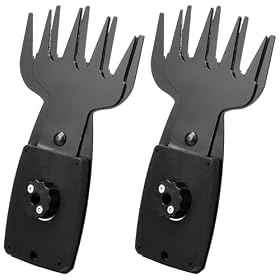
Hedge trimmers are efficient for shaping many smaller stems, while loppers are usually the better tool for isolated thick branches. Compare cutting capacity, control, safety, and workflow before you start pruning.
A hedge trimmer is faster for cutting many similarly sized stems across a hedge, but loppers are usually the better choice for isolated thick stems. The deciding factors are the stem diameter, the trimmer’s stated maximum cutting capacity, how much control you need, and whether the branch is woody enough to jam or damage the blades.
The quick answer
Use a hedge trimmer when:
Most stems fit within the tool’s rated cutting capacity.
You are trimming a hedge surface evenly rather than removing individual branches.
Speed and a uniform finish matter more than making precise cuts.
The stems are relatively flexible and evenly distributed.
Use loppers when:
The hedge contains a few noticeably thicker branches.
You need to remove a specific stem at its base or at a precise pruning point.
The branch is too thick for the hedge trimmer’s blade gap.
The trimmer catches, stalls, or requires force to cut.
A practical approach is to use loppers for the thickest stems first, then use the hedge trimmer to shape the remaining growth.
How hedge trimmers handle thick stems
A hedge trimmer cuts with reciprocating teeth. Each tooth passes a stationary or opposing surface, pulling and slicing stems that fit between the teeth. The space between those teeth is often called the blade gap, but the manufacturer’s stated maximum cutting capacity is the specification that matters most.
A larger blade gap does not automatically mean the tool will cut every stem of that diameter easily. Actual performance can also depend on:
The wood’s hardness and dryness
Whether the stem is straight or flexible
Battery charge or engine condition
Blade sharpness and lubrication
The angle at which the stem enters the teeth
Whether several branches are packed together
Do not force a stem into the blade or twist the tool to make a cut. If the stem does not enter and sever cleanly, stop and switch to loppers or another tool recommended by the manufacturer.
Check the manufacturer’s cutting capacity
Before buying or using a hedge trimmer for thicker growth, look for its maximum branch or cutting diameter in the manual or product specifications. Treat that figure as a limit, not a promise that every type of wood will cut effortlessly.
If the hedge includes stems near that limit, choose a tool with additional capacity rather than relying on the exact minimum specification. For routine pruning of thick, woody growth, loppers may still provide better control and cleaner cuts.
Product prices and availability are accurate as of the date/time indicated and are subject to change. Any price and availability information displayed on Amazon.com at the time of purchase will apply to the purchase of this product.
Why loppers are better for isolated thick stems
Loppers use long handles to multiply hand force. Their jaws surround a single branch, allowing you to position the cut accurately and apply pressure gradually. This makes them useful for removing occasional thick stems that would slow down or jam a hedge trimmer.
Loppers are especially helpful when you need to:
Cut one branch without disturbing nearby shoots
Make a clean reduction cut at a chosen location
Remove dead or damaged wood
Work close to the hedge base
Avoid pushing a powered blade into a branch that is too large
The tradeoff is speed. Cutting dozens of branches with loppers is tiring and can leave an uneven hedge surface, so they are usually a companion tool rather than a replacement for a hedge trimmer.
Replacement cutting blades for worn or damaged tools
Product prices and availability are accurate as of the date/time indicated and are subject to change. Any price and availability information displayed on Amazon.com at the time of purchase will apply to the purchase of this product.
Blade length, tooth gap, and power source
These specifications affect the choice, but they do different jobs.
Blade length
A longer blade can cover more hedge surface with each pass, which is useful for large, flat sides. It may be less convenient in tight spaces and can feel heavier or harder to control. Blade length does not by itself determine how thick a stem the trimmer can cut.
Tooth gap or cutting capacity
The gap between teeth influences the size of stems that can enter the cutting area. Always compare the manufacturer’s stated capacity rather than judging by blade length alone.
A narrow-gap trimmer is generally suited to fine, frequent shaping. A model with greater stated capacity is more appropriate when the hedge regularly develops thicker woody stems, but it still should not be used beyond its specifications.
Corded, battery, and gas power
Power source affects convenience, runtime, noise, weight, and maintenance. It does not eliminate the mechanical limit imposed by the blade gap or cutting system.
Corded models: Avoid fuel and battery charging, but the cord limits reach and requires careful routing.
Battery models: Offer mobility and generally simpler starting, but runtime, battery condition, and total tool weight matter.
Gas models: May suit extended work where fuel and maintenance are acceptable, but they can be heavier, louder, and more demanding to maintain.
A more powerful motor is not a reason to cut stems beyond the specified capacity. If the branch is too thick for the tool, use loppers or a pruning saw as appropriate.
Product prices and availability are accurate as of the date/time indicated and are subject to change. Any price and availability information displayed on Amazon.com at the time of purchase will apply to the purchase of this product.
A sensible workflow for mixed-size hedges
Inspect the hedge while the power tool is off. Identify thick, dead, tangled, or unusually hard branches.
Check the trimmer’s capacity. Compare the largest stems with the manufacturer’s stated limit.
Remove oversized stems with loppers. Make controlled cuts without forcing the hedge trimmer.
Check for hidden objects. Look for wire, fencing, ties, stones, or other material that could damage the blade.
Trim the hedge with the appropriate angle and light pressure. Let the moving teeth do the work.
Stop if the blade jams or the motor slows sharply. Disconnect the power source before clearing material, following the manual’s procedure.
Clean and lubricate the blade as directed. A clean, properly lubricated blade is easier to operate and less likely to bind.
Safety differences between the tools
Both tools can cause severe injury. Wear eye protection, sturdy footwear, and gloves suited to the work. Keep bystanders away, and never cut where you cannot see what is behind the branch.
For a hedge trimmer:
Keep both hands on the designated grips.
Maintain a stable stance and keep the blade away from your body.
Disconnect the battery, unplug the cord, or stop the engine before clearing a jam or servicing the blade.
For corded models, keep the cord behind you and away from the cutting path.
Do not use a powered trimmer from an unstable ladder or in a position where you cannot control it.
For loppers:
Keep fingers clear of the jaws and handles’ closing points.
Do not extend the handles with improvised pipe or other tools unless the manufacturer specifically allows it.
Stop if the handles require excessive force; the branch may be beyond the tool’s capacity.
If branches are overhead, near utility lines, unusually large, or difficult to reach safely, use a qualified professional instead of attempting the cut from a ladder or unstable platform.
When to sharpen, replace, or change tools
A hedge trimmer that struggles with stems within its rated capacity may need a clean, sharpening, adjustment, or replacement blade. Follow the manufacturer’s service instructions; some blades require professional sharpening or replacement rather than field filing.
A replacement blade or service is reasonable when the teeth are damaged, badly worn, or no longer cut evenly after cleaning and proper lubrication. Replace the trimmer itself when the tool has persistent electrical, battery, control, or motor problems, or when its cutting capacity no longer matches the hedge.
If thick stems are only occasional, keep a suitable pair of loppers with the hedge trimmer. If nearly every trimming session involves woody branches near the trimmer’s limit, choose a hedge trimmer designed for that type of growth—or use loppers or a pruning saw for the structural cuts and reserve the trimmer for shaping.
FAQ
Can a hedge trimmer cut thick branches?
It can cut stems only within the manufacturer’s stated cutting capacity, and the result depends on the wood and blade condition. Do not force branches that do not enter or cut cleanly; use loppers or another suitable pruning tool instead.
Are loppers better than a hedge trimmer for thick stems?
Usually, yes, when the stems are isolated or near the hedge trimmer’s maximum capacity. Loppers provide more control and leverage for individual branches, while hedge trimmers are faster for many smaller stems.
Should I use loppers before or after a hedge trimmer?
Use loppers first to remove oversized, dead, or misplaced stems. Then use the hedge trimmer to shape the remaining hedge evenly.
Does a longer hedge trimmer blade cut thicker branches?
Not necessarily. Blade length mainly affects how much hedge surface you can cover in one pass. Tooth spacing and the manufacturer’s stated cutting capacity are more relevant to stem thickness.