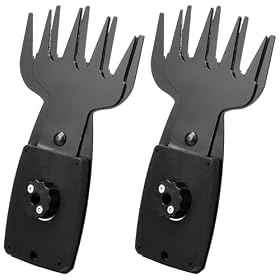
The right hedge trimmer blade length depends on hedge size, your reach, and how much control you need—not simply on choosing the longest blade available.
What do you need help with?
Open an answer, or tell us what we should cover next.
Answered in this guide
Choose a blade length for a long privet hedge
For a long privet hedge, choose a medium or long blade based on the hedge’s height, depth, and straightness. Extra length helps cover more hedge comfortably, while a shorter blade can be easier to control and less tiring.
Compare short, medium, and long hedge trimmer blades
Short blades favor control, medium blades offer a versatile balance, and long blades suit broad, straight hedges. These are useful starting points rather than fixed rules because compatible lengths vary by trimmer model.
Understand how blade length changes trimming control
Longer blades cover more hedge with each pass and can add reach, but they are not more powerful. Shorter blades usually offer better control, especially when shaping smaller or less accessible hedges.
Choose between an articulating head and a straight shaftRead this guide →
Requests help us prioritize the next guide. No email required.
One anonymous request per topic.
The blade length you actually need depends on the hedge’s height and depth, your reach, and how much control you want while trimming. A longer blade covers more area per pass, but a shorter blade is usually easier to maneuver and more forgiving when shaping uneven or smaller hedges.
For most homeowners, choose the shortest blade that comfortably reaches the hedge and handles its typical size. Blade length affects coverage and control; it does not, by itself, determine how thick a branch the trimmer can cut.
How blade length affects trimming
Longer blades cover more area
A longer blade can trim a wider section of hedge with each pass. This can be useful for:
Long, straight hedges
Broad hedge faces
Tall shrubs where extra reach helps
Maintaining an already even surface
Fewer passes may make routine trimming faster, especially on a large hedge with relatively soft, uniform growth.
Shorter blades are easier to control
A shorter blade is generally easier to start, stop, and reposition. It can be the better choice for:
Small or narrow hedges
Detailed shaping
Curved or uneven surfaces
Tight spaces around fences, walls, and garden beds
Users who find longer tools tiring
A shorter blade also reduces the amount of tool extending beyond the area you are cutting, which can make it easier to avoid catching nearby plants or structures.
Longer does not mean more powerful
Blade length is separate from cutting capacity. The ability to cut thicker stems depends more on the tooth gap, motor or engine output, blade condition, and the hedge trimmer’s design.
Check the manufacturer’s stated maximum cutting diameter rather than assuming a longer blade will cut thicker branches. Do not force a trimmer through material above its rated capacity.
Product prices and availability are accurate as of the date/time indicated and are subject to change. Any price and availability information displayed on Amazon.com at the time of purchase will apply to the purchase of this product.
General blade-length guidelines
These are practical starting points, not universal rules. Available lengths and compatible blades vary by trimmer model.
Short blades: better for control
A shorter blade is often suitable for small ornamental hedges, low shrubs, and detailed shaping. It is usually easier to handle for vertical and angled cuts, particularly when the hedge is close to other plants or structures.
Choose this type when precision matters more than covering a large area quickly.
Medium blades: a versatile choice
A medium-length blade is a practical all-purpose option for many residential hedges. It provides a useful balance between reach, coverage, weight, and maneuverability.
This length is often appropriate when you maintain a mixture of hedge sizes or are replacing a blade on a general-purpose trimmer. Confirm that the replacement blade matches your exact tool before buying.
Long blades: useful for large, straight hedges
A long blade can make broad, even surfaces more efficient to trim. It may also provide additional reach, but it can feel heavier at the front of the tool and may be harder to control around corners or irregular growth.
Choose a longer blade when:
The hedge has a large, straight face
You regularly maintain a substantial amount of hedge
The tool remains comfortable at the required reach
You have enough clearance to work safely
A long blade is not a substitute for a pole hedge trimmer when the hedge is beyond a safe and comfortable working height. Avoid stretching, overreaching, or using a step ladder in a way that makes the trimmer unstable.
Product prices and availability are accurate as of the date/time indicated and are subject to change. Any price and availability information displayed on Amazon.com at the time of purchase will apply to the purchase of this product.
Match blade length to the hedge
For low hedges
A shorter or medium blade is usually easier to control. Extra length may provide little benefit if you can already reach the entire hedge face comfortably.
For tall hedges
Blade length can provide some additional reach, but it is only one part of the solution. If you cannot keep both feet stable and maintain control, use a suitable pole-style tool or have the work done safely by a qualified professional.
For deep hedges
A longer blade may help reach farther across the top or side, but do not lean the tool beyond a stable position. For very deep hedges, tool balance and safe access matter more than gaining a few extra inches of blade.
For long, formal hedges
A longer blade can reduce the number of passes needed across a flat surface. This benefit is greatest when the hedge is regularly maintained and the growth is not too thick or woody.
For rounded or irregular hedges
A shorter blade often gives better control as you follow changing angles and contours. It may take more passes, but the improved handling can make it easier to maintain a consistent shape.
Do not confuse blade length with tooth gap
Blade length tells you how much cutting edge is available. Tooth gap describes the approximate space between cutting teeth and is more relevant to the size of stems the tool is designed to handle.
Before choosing a trimmer or replacement blade, check:
The manufacturer’s maximum cutting diameter
Tooth-gap information, if provided
Whether the blade is designed for soft green growth or heavier woody stems
The blade’s total length and cutting length
The mounting pattern and compatibility with your trimmer
A replacement blade must match the tool’s make and model or the manufacturer’s approved compatibility list. Similar-looking blades may not fit correctly, align with the drive mechanism, or provide the required guarding.
Blade length also affects weight and fatigue
A longer blade can shift more weight toward the front of the trimmer. On a battery-powered or corded tool, that can make overhead and side-to-side work more tiring even if the motor has enough power.
When comparing tools, consider the complete working setup rather than blade length alone:
Overall tool weight
Balance with the battery installed, if applicable
Handle position and adjustment range
Vibration and grip comfort
Hedge height and the time required to finish the job
If a longer trimmer causes your arms or shoulders to fatigue, the theoretical time saved by covering more area may not be worthwhile.
How to choose between two blade lengths
When two otherwise suitable options are available, use this decision process:
Measure the hedge’s approximate height and depth. Include the areas you can safely reach without stretching.
Decide whether coverage or precision matters more. Choose longer for broad, straight surfaces and shorter for shaping or tight spaces.
Check the trimmer’s rated cutting capacity. Blade length will not compensate for an unsuitable tooth gap or underpowered tool.
Consider balance and fatigue. A blade that is too long can make routine trimming uncomfortable.
Verify compatibility. For replacement blades, confirm the exact tool model, mounting points, dimensions, and manufacturer guidance.
Choose the shortest option that completes the job safely. This is often the easiest choice for general residential maintenance.
When a different tool is a better answer
A longer blade may not solve the real problem if:
The hedge is too tall to reach safely from the ground
The branches exceed the trimmer’s rated cutting capacity
The hedge is too thick for the tool to handle efficiently
You need to cut large woody branches rather than new hedge growth
The tool becomes difficult to control because of weight or vibration
For thick individual branches, bypass pruners, loppers, or a pruning saw may be more appropriate, depending on branch size and the manufacturer’s guidance. For high hedges, use a purpose-designed pole trimmer or arrange professional service rather than overextending a handheld trimmer.
Safe use and blade care
Inspect the blade before each use. Stop the tool, disconnect the power source, and follow the manufacturer’s procedure before clearing material or working near the blade. Battery tools should have the battery removed; corded tools should be unplugged.
Keep the blade clean and lubricated according to the owner’s manual. A dull, damaged, bent, or excessively corroded blade can increase vibration and reduce cutting performance. Replace it when sharpening is no longer practical or when the blade or mounting area is damaged.
Store the tool with its blade sheath fitted when the manufacturer supplies one. If the trimmer vibrates unusually, makes a new noise, or the blade does not move smoothly, stop using it and inspect it according to the manual. Have electrical or mechanical faults handled by a qualified service professional when the cause is not obvious.
FAQ
Is a longer hedge trimmer blade better?
Not automatically. A longer blade covers more area on broad, straight hedges, but it can be heavier and harder to control. Choose the shortest blade that provides enough reach and coverage for your hedge.
What blade length is best for most homeowners?
A medium-length blade is often the most versatile choice for routine residential hedge maintenance, but the correct length depends on hedge size, tool balance, and the type of shaping required.
Does blade length determine how thick a branch a hedge trimmer can cut?
No. Maximum cutting diameter depends more on the tooth gap, motor or engine, blade design, and the manufacturer’s rating. Check the tool’s specifications rather than relying on blade length.
Can I put a longer replacement blade on my hedge trimmer?
Only if the manufacturer specifically lists it as compatible. The blade must match the tool’s mounting system, dimensions, drive mechanism, guarding, and operating requirements.
Should I use a longer blade for a tall hedge?
Only when you can maintain stable footing and full control. If the hedge cannot be reached safely from the ground, use a suitable pole trimmer or hire a qualified professional instead of stretching or climbing unsafely.