For a long privet hedge, a medium-to-long blade usually gives the best balance of coverage and control. Blade length is only part of the decision: hedge height, thickness, branch size, trimmer weight, and blade gap matter too.
What do you need help with?
Open an answer, or tell us what we should cover next.
Answered in this guide
Choose a blade length that suits a long privet hedge
For most long, even privet hedges, consider a 20- to 24-inch blade for broader coverage and a straighter finish. Choose a shorter blade when lighter weight, closer control, and easier maneuvering matter more than trimming speed.
Make sure the trimmer can cut the hedge’s woody stems
Blade length affects coverage, but tooth gap and cutting capacity matter more when privet is thick, woody, or overgrown. Match the trimmer’s gap to the typical stem thickness it must cut.
Check whether the trimmer can reach the whole hedge safely
A longer blade does not provide extra height. For a tall hedge, check whether the trimmer lets you work without stretching or holding it above shoulder height, since additional reach may be needed.
Choose a trimmer that can run long enough without tiring you
Long hedges require enough battery runtime and a manageable tool. Check whether a cordless model can work for the full job and whether its weight remains comfortable during extended trimming.
Choose between a pole and handheld trimmer for a tall hedgeRead this guide →
Requests help us prioritize the next guide. No email required.
One anonymous request per topic.
A 20- to 24-inch hedge trimmer blade is a practical starting point for a long privet hedge because it covers more hedge with each pass without becoming as unwieldy as the longest models. Choose a shorter blade if the hedge is narrow, curved, or difficult to control; choose a longer one if the hedge is broad, straight, and regularly maintained.
How blade length affects a long privet hedge
A longer blade can make it faster to trim a long, relatively even hedge. It covers more surface area per stroke and can help produce a straighter finish when you keep the trimmer moving steadily.
However, extra length also adds weight and leverage at the front of the tool. That can make the trimmer harder to control, especially when shaping the top of a tall hedge or working around corners. A long blade is not automatically better if it causes fatigue or uneven cuts.
As a general guide:
16 to 20 inches: Easier to control and suitable for smaller, shaped, or irregular privet hedges.
20 to 24 inches: A useful middle ground for many long residential hedges.
24 inches and longer: Helpful for broad, straight hedges when the operator can comfortably manage the extra length and weight.
These ranges describe blade length, not the maximum safe working height. You should not use a hedge trimmer from an unstable ladder or overreach to gain extra height.
Match the blade to hedge thickness and branch size
Blade length determines coverage, but blade gap and cutting capacity are more important when privet has become woody or overgrown. Blade gap is the distance between the cutting teeth. A wider gap can handle thicker stems than a narrow-tooth trimmer, subject to the manufacturer’s stated capacity.
For a regularly trimmed privet hedge with mostly soft, thin growth, a standard residential hedge trimmer may be adequate. If the hedge has thick woody branches, check the tool’s permitted cutting diameter rather than assuming a longer blade will solve the problem.
Do not force a hedge trimmer through branches larger than its instructions allow. Use suitable loppers or a pruning saw for heavier growth, or have substantial renovation work handled by a qualified professional.
Product prices and availability are accurate as of the date/time indicated and are subject to change. Any price and availability information displayed on Amazon.com at the time of purchase will apply to the purchase of this product.
Consider hedge height and reach separately
Blade length does not replace reach. If the hedge is tall, an ordinary long-blade trimmer may still leave you stretching or working above shoulder height.
For a tall privet hedge, consider:
A pole hedge trimmer for high sections, if its weight and balance are manageable.
An adjustable head for trimming the top at a safer angle from ground level.
A model with a harness or support system if the manufacturer supplies one.
Professional help when the hedge requires unstable access equipment or is close to overhead lines.
A pole trimmer can improve reach, but it is often less nimble and more tiring than a standard trimmer. For a hedge that is long but not especially tall, a regular trimmer with a 20- to 24-inch blade may be easier to use.
Product prices and availability are accurate as of the date/time indicated and are subject to change. Any price and availability information displayed on Amazon.com at the time of purchase will apply to the purchase of this product.
Power source and runtime matter on a long hedge
Long hedges increase the importance of runtime and fatigue. A cordless model may be convenient, but check whether its battery system provides enough working time for the job. Keep a compatible spare battery available if the hedge cannot be completed on one charge.
Corded electric trimmers avoid battery changes but require careful cable management. Keep the cord behind you, away from the blade, and use only an outdoor-rated setup with the protection specified by the manufacturer. Gas-powered trimmers can suit demanding work, but they are heavier, noisier, and require more maintenance.
The best blade length is one you can control for the full job. A slightly shorter, lighter trimmer is often more productive than a longer model that forces frequent breaks.
Product prices and availability are accurate as of the date/time indicated and are subject to change. Any price and availability information displayed on Amazon.com at the time of purchase will apply to the purchase of this product.
Choosing a replacement blade
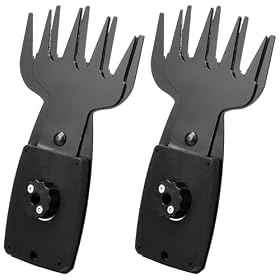
If you are buying a replacement blade, match the exact trimmer model and attachment system. Blade length alone is not enough. Confirm:
The manufacturer and model compatibility
Blade length and tooth spacing
Mounting points and fastener arrangement
Whether the replacement includes the complete cutting assembly or only a component
The required lubrication and installation procedure
Disconnect the battery, unplug the tool, or remove the spark-plug connection as directed before inspecting or replacing a blade. Wear cut-resistant gloves while handling the cutting assembly, and follow the manufacturer’s service instructions. If the blade is bent, cracked, loose, or difficult to align, replacement is safer than trying to straighten it.
Product prices and availability are accurate as of the date/time indicated and are subject to change. Any price and availability information displayed on Amazon.com at the time of purchase will apply to the purchase of this product.
Practical recommendation
For most long, regularly maintained privet hedges, start by considering a 20- to 24-inch blade with a cutting gap appropriate for the hedge’s typical stem thickness. Move toward a shorter blade when control, low weight, and maneuverability matter more than coverage. Move toward a longer blade only when the hedge is broad and straight and you can use the tool without overreaching or losing control.
Before buying, measure the hedge’s height and width, inspect the thickest stems you normally cut, and compare the complete tool’s weight—not just its blade length. Those checks will usually lead to a better choice than selecting the longest blade available.
FAQ
Is a 24-inch blade too long for a privet hedge?
Not necessarily. A 24-inch blade can suit a long, broad, straight privet hedge, but it may feel heavy or awkward on narrow, curved, or tall sections. Choose it only if you can control the tool comfortably throughout the job.
What blade length is easiest for trimming a long hedge?
A 20- to 24-inch blade is often a practical compromise between coverage and control. A shorter blade may be easier to maneuver, while a longer blade can reduce the number of passes on a broad, even hedge.
Does a longer hedge trimmer blade cut thicker privet branches?
No. Blade length mainly affects coverage. Cutting thicker stems depends on the tool’s blade gap and the manufacturer’s specified cutting capacity.
Should I use a pole hedge trimmer for a tall privet hedge?
A pole hedge trimmer can improve reach from the ground, but it may be heavier and harder to control. Use one only according to its instructions, and avoid ladders, overreaching, or work near overhead electrical lines.