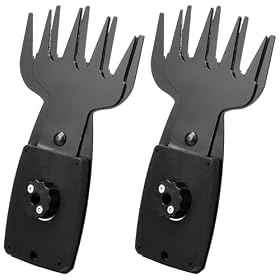
Tooth gap indicates the space between hedge trimmer teeth, but it is not the only measure of how thick a branch the tool can cut. Compare the gap with the manufacturer’s rated cutting capacity, branch hardness, and the condition of the hedge before choosing a blade or trimmer.
The short answer
A hedge trimmer’s tooth gap should be large enough to admit the branches you need to cut, but the gap alone does not guarantee that the tool can sever them. Use the manufacturer’s stated maximum cutting capacity as the primary limit, then choose a tooth gap that comfortably fits the typical branch thickness in your hedge.
Do not force a branch into a narrow gap, and do not treat a wide tooth gap as proof that a trimmer can handle heavy woody growth. Motor power, blade design, branch hardness, and the tool’s cutting-capacity rating also matter.
Product prices and availability are accurate as of the date/time indicated and are subject to change. Any price and availability information displayed on Amazon.com at the time of purchase will apply to the purchase of this product.
What tooth gap means
Tooth gap is the distance between opposing cutting teeth on a hedge trimmer blade. It determines how much space is available for a branch to enter between the teeth before the moving blade passes over it.
Common hedge trimmer configurations include narrow, medium, and wider gaps. Narrow gaps are generally intended for lighter hedge maintenance and smaller, softer growth. Wider gaps are more suitable for established hedges with thicker stems, provided the trimmer is rated for that work.
The gap is a blade dimension. It is not the same as:
Blade length: How much hedge the trimmer can cover in one pass.
Cutting capacity: The maximum branch diameter the manufacturer says the tool is designed to cut.
Motor power: The tool’s ability to keep the blade moving under load.
Stroke rate: How quickly the blade teeth move back and forth.
Product prices and availability are accurate as of the date/time indicated and are subject to change. Any price and availability information displayed on Amazon.com at the time of purchase will apply to the purchase of this product.
Match tooth gap to branch thickness
Start by inspecting the hedge rather than choosing a gap based only on the plant name. Measure or estimate the thickest stems you expect to cut during normal maintenance.
A practical approach is:
Identify the usual branch thickness, not just an occasional oversized stem.
Check the trimmer’s published maximum cutting capacity.
Choose a tooth gap that admits the branches without forcing them into the blade.
Leave a margin below the stated maximum for hard, dry, or unusually woody growth.
Use loppers, pruning shears, or a pruning saw for branches beyond the trimmer’s intended range.
For example, a hedge with mostly thin green shoots does not need a wide-gap, heavy-duty blade simply because one old branch is thicker. Conversely, a mature hedge with frequent woody stems may cause a narrow-gap trimmer to stall, jam, or leave uncut branches.
Why tooth gap and cutting capacity are not identical
A branch can physically fit between the teeth and still be too difficult for the trimmer to cut. The published cutting capacity accounts for more than the opening between the teeth. It may also reflect the motor, blade movement, cutting geometry, and the manufacturer’s intended use.
Actual performance can change with:
Wood hardness: Dry or dense branches require more cutting force than soft green growth.
Branch shape: A straight stem may enter more easily than a forked or angled one.
Blade sharpness: Dull teeth increase friction and can crush rather than cleanly cut.
Battery charge or power supply: A cordless trimmer may lose cutting performance as its battery becomes depleted.
Blade cleanliness and lubrication: Sap and debris can restrict blade movement.
Cutting angle: Twisting the tool or attacking a branch at an awkward angle can increase binding.
For these reasons, a branch near the maximum rating may be better handled with a manual cutting tool, especially if it is old, hard, or irregularly positioned.
Narrow versus wide tooth gaps
Narrow tooth gaps
A narrow gap is usually a good fit for:
Light, frequent hedge trimming
Young or soft green growth
Shaping formal hedges
Smaller ornamental shrubs
Users who value controlled, fine trimming
The limitation is that thicker stems may not enter the cutting area easily. Trying to push them through can make the blade snag or cause the motor to labor.
Wider tooth gaps
A wider gap can be useful for:
Mature hedges with thicker stems
Less-frequent maintenance
Faster removal of mixed-size growth
Shrubs that produce woody new stems
A wider gap may leave a less fine finish on very small shoots, depending on the blade design and the operator’s technique. It also does not replace a saw or loppers for branches beyond the trimmer’s rating.
Blade length does not solve a tooth-gap mismatch
A longer blade covers more hedge in each pass, but it does not necessarily cut thicker branches. If branch thickness is the problem, look first at tooth gap and the manufacturer’s cutting-capacity rating.
A shorter trimmer with a suitable gap can be more appropriate for a dense hedge than a longer model with a narrow gap. A longer blade can also be heavier and harder to control, particularly when working above shoulder height.
Choose blade length based on the hedge’s size, access, and your ability to control the tool. Choose tooth gap based on the hedge’s branch thickness.
How to check whether a blade is suitable
Before buying a replacement blade or a different hedge trimmer, verify:
The exact tool or blade compatibility
The manufacturer’s stated maximum cutting capacity
The tooth-gap measurement, if listed
Blade length and mounting arrangement
Whether the blade is intended for green growth, woody stems, or general hedge maintenance
For cordless tools, compatibility with the correct battery system
Replacement blades are not universal. A blade that appears to have the right length may still have incompatible mounting points, drive geometry, or safety features. Use the model information specified by the manufacturer rather than relying only on appearance.
If branches are too thick for your trimmer
Stop instead of repeatedly forcing the blade into the branch. Turn off and unplug a corded tool, or remove the battery from a cordless tool, before clearing a jam or inspecting the blade. Follow the manufacturer’s shutdown and maintenance instructions.
Use the following decision guide:
Only a few oversized branches: Cut them separately with loppers or a pruning saw.
Many branches exceed the trimmer’s rating: A wider-gap hedge trimmer may be appropriate, if its capacity matches the work.
The blade fits the branch but stalls: Check sharpness, sap buildup, battery charge, and whether the branch is harder than the tool is designed to handle.
The blade is damaged or badly worn: Replace the blade or have it serviced rather than continuing to force the tool.
The tool smokes, smells hot, or repeatedly stops: Stop using it and follow the manufacturer’s service guidance. Electrical or motor faults should be assessed by a qualified repair professional when required.
Bottom line
Tooth gap is a useful first filter, but the manufacturer’s cutting-capacity rating is the deciding specification. Select a gap that accommodates the normal branch thickness in your hedge, keep some margin for hard or dry wood, and use loppers or a saw for branches outside the trimmer’s rating. Blade length affects reach and coverage, not the maximum branch diameter by itself.
FAQ
Is tooth gap the same as hedge trimmer cutting capacity?
No. Tooth gap is the space between the blade teeth, while cutting capacity is the manufacturer’s stated maximum branch diameter. Cutting capacity also depends on motor strength, blade design, branch hardness, and operating conditions.
Should I choose a wider tooth gap for thick branches?
Usually, a wider gap is more suitable for thicker branches, but confirm that the trimmer’s published cutting capacity also covers them. Do not rely on tooth gap alone, especially for hard or dry wood.
Can a longer hedge trimmer blade cut thicker branches?
Not necessarily. Blade length mainly affects coverage and reach. Tooth gap and the manufacturer’s cutting-capacity rating are more relevant to branch thickness.
What should I use for branches larger than the trimmer rating?
Use an appropriate pair of loppers or a pruning saw. If many branches exceed the rating, consider a hedge trimmer specifically designed and rated for larger woody growth.