Hedge trimmer blades usually bind because the branch is too thick for the tool, the blades are dull or damaged, or the cutting technique is forcing too much wood between them. Stop the trimmer, disconnect its power source, and check the blade, branch size, and lubrication before continuing.
Blades binding in thick branches
Hedge trimmer blades bind in thick branches when the wood exceeds the trimmer’s intended cutting capacity or when dull, damaged, dirty, or poorly lubricated blades cannot maintain their cutting motion. Stop immediately rather than forcing the trigger. Disconnect the battery, unplug the trimmer, or shut off the engine before touching the blade area.
Clear the jam safely
Release the trigger and wait for all blade movement to stop.
Disconnect the power source. Remove the battery or unplug the cord. For a gas model, follow the manufacturer’s instructions for stopping and securing the engine.
Wear sturdy gloves and keep your hands away from the blade teeth.
Remove loose twigs with pliers or a stick, not your fingers.
Do not pull hard on a branch that is trapped between moving blades. Cutting the branch with a hand saw may be safer if it cannot be freed easily.
Inspect the blade before reconnecting power.
Never try to free a jam by repeatedly squeezing the trigger. That can overheat the motor, damage the drive system, or cause the blade to move unexpectedly.
Check whether the branch is too thick
Look up the maximum cutting diameter in the owner’s manual. This specification is affected by the gap between the blade teeth, motor power, blade design, and the type and condition of the wood. A stated capacity is not a guarantee that every hard, dry, or angled branch will cut easily.
If the branch is larger than the recommended capacity, use bypass loppers or a pruning saw instead. A hedge trimmer is designed mainly for shaping and maintaining hedge growth, not for cutting large woody limbs.
Branches can also bind when they are close to the tool’s limit. Avoid forcing the trimmer through them. Make a separate cut with a suitable pruning tool, or use a hedge trimmer with a larger manufacturer-rated cutting capacity if that type of work is routine.
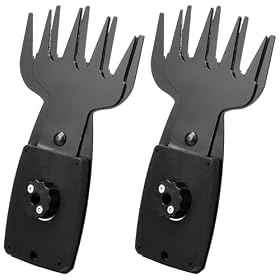
Replacement blade for worn or damaged cutting teeth
Product prices and availability are accurate as of the date/time indicated and are subject to change. Any price and availability information displayed on Amazon.com at the time of purchase will apply to the purchase of this product.
Inspect the blades for dullness or damage
With the power disconnected, look for:
Rounded or visibly dull cutting edges
Bent teeth or rails
Teeth that are chipped, cracked, or missing
A blade that does not sit straight
Sap and compacted plant material between the teeth
Uneven movement or excessive play in the blade assembly
Dull blades tend to push and pinch branches instead of slicing them. A bent blade can bind even on branches within the rated capacity. Do not straighten cracked or badly bent components unless the manufacturer specifically provides an approved procedure.
Minor dullness may be addressed by sharpening if the owner’s manual permits it and you can maintain the original tooth angles. Otherwise, have the blade serviced or replace it with the correct blade assembly. The replacement must match the trimmer’s model and blade design; a blade that physically fits may still be unsafe or incompatible.
Product prices and availability are accurate as of the date/time indicated and are subject to change. Any price and availability information displayed on Amazon.com at the time of purchase will apply to the purchase of this product.
Clean and lubricate the cutting assembly
Plant sap and debris increase friction and can prevent the teeth from closing correctly. After disconnecting power, brush away debris and clean the blade according to the manufacturer’s instructions. Avoid spraying liquid into the motor, switch, battery compartment, or other electrical openings.
Apply only the blade lubricant specified or approved by the manufacturer. Lubricate at the recommended intervals, especially when cutting resinous plants or working in dusty conditions. Too little lubrication increases friction; excess oil can attract grit and create a sticky abrasive layer.
If the blade becomes hot quickly, makes a scraping sound, or remains difficult to move by hand after cleaning, stop using the trimmer and have the blade drive inspected.
Manual cutting tool for branches too thick for a hedge trimmer
Product prices and availability are accurate as of the date/time indicated and are subject to change. Any price and availability information displayed on Amazon.com at the time of purchase will apply to the purchase of this product.
Use a technique that reduces binding
Even a suitable trimmer can jam if it is pushed sideways or used at the wrong angle.
Approach the branch with the cutting teeth moving at full operating speed.
Let the outer part of the blade do the cutting instead of forcing the branch deep into the blade base.
Keep the blade aligned with the branch rather than twisting the tool around it.
Use smooth passes and avoid jabbing repeatedly into one thick stem.
Cut softer, thinner growth first if dense branches are hiding larger woody stems.
Do not use the trimmer as a lever or pry bar.
For especially thick stems that are still within the rated capacity, a slower, controlled pass may work better than pushing aggressively. If the blades repeatedly stall, switch to loppers or a pruning saw instead of continuing to load the motor.
Check for setup and power problems
If the trimmer binds on branches that should be within its capacity, check the basic setup:
Confirm that the correct blade is installed and secured.
Make sure the blade cover, guard, and fasteners are fitted as directed.
On a battery model, use a fully charged, manufacturer-approved battery and check that it locks into place.
On a corded model, use the extension cord type and length permitted by the manual. A long or undersized cord can cause voltage drop and reduce cutting performance.
On a gas model, follow the manual’s requirements for fuel, air filtration, and engine operation.
Do not bypass a safety switch, remove a guard, or continue operating if the motor only hums, smells hot, sparks unusually, or trips a breaker. Disconnect the tool and arrange qualified service when the fault may involve wiring, the switch, the motor, or the drive mechanism.
When to replace the blade or trimmer
A replacement blade is usually reasonable when the existing blade is badly bent, cracked, missing teeth, heavily worn, or no longer cuts properly after approved cleaning and sharpening. Replace the complete blade assembly when the manufacturer does not provide individual service parts.
A replacement trimmer may make more sense when the tool is repeatedly used on branches beyond its rated capacity, the drive mechanism is worn, or repair costs approach the value of the machine. Choose based on the manufacturer’s stated cutting capacity, blade length, power source, weight, and parts availability—not blade length alone.
If a properly sized, clean, lubricated blade still binds on ordinary hedge growth, stop using the tool. A service technician can check the blade alignment, gear case, clutch, motor, and electrical system safely.
FAQ
Can I use a hedge trimmer to cut thick branches?
Only if the branches are within the cutting diameter specified by the manufacturer. For larger, hard, or dry branches, use bypass loppers or a pruning saw instead.
Why does my hedge trimmer bind even when the branch is not very thick?
Common causes include dull or bent blades, sap buildup, insufficient lubrication, an incorrect blade installation, low battery power, an unsuitable extension cord, or a problem in the drive mechanism.
Should I sharpen or replace hedge trimmer blades?
Sharpening may be suitable for minor dullness when the manufacturer permits it and the original tooth angles can be preserved. Replace or professionally service blades that are cracked, badly bent, missing teeth, or heavily worn.
Is it safe to pull a branch out of a jammed hedge trimmer?
Disconnect the battery or plug first and wait for all movement to stop. Wear gloves, avoid the teeth, and use pliers or a hand tool. Do not pull against a powered or potentially energized blade.