Arborvitae generally benefits from wider hedge trimmer tooth spacing than boxwood. For fine boxwood shaping, a blade with about 3/8- to 1/2-inch tooth spacing is usually the better fit. Arborvitae often calls for about 5/8- to 3/4-inch spacing, especially when the hedge contains thicker, older stems. Always compare the blade’s stated maximum cutting capacity with the actual branches you plan to cut.
Blade & Reach · Mon Sep 07
Tooth spacing for arborvitae versus boxwood
Arborvitae and boxwood usually need different hedge trimmer tooth spacing. Use a smaller gap for fine boxwood shaping and a wider gap for thicker arborvitae stems, while checking the hedge trimmer’s rated cutting capacity.
What tooth spacing means
Tooth spacing is the distance between adjacent cutting teeth on the blade. It affects both the type of growth the trimmer can engage and the finish it leaves behind.
- Smaller spacing: Better for thin stems, soft new growth, and precise shaping
- Wider spacing: Better for thicker stems and dense, coarser growth
- Larger spacing does not automatically mean a cleaner cut: It can be less precise on small-leaved shrubs
Tooth spacing is different from blade length. A longer blade covers more hedge with each pass, while tooth spacing determines how much material can fit between the teeth.
Replacement blade with close tooth spacing for boxwood
 9.1inch Hedge Trimmer Blade Max Cutting Length9.1inch (230mm) Suitable for Nicklaua Green Hedge Trimmer, Includes…Nicklaua
$8.99 as of
View on Amazon Black & Decker OEM N815256 Hedge Trimmer Blade Assembly DCHT820P1 DCHT820BBLACK+DECKER
$76.80 as of
View on Amazon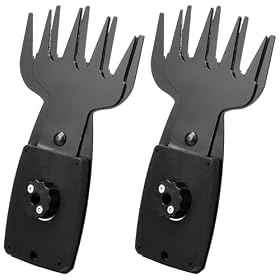 2 Pack 302348001 Hedge Trimmer Grass Shear Blade AssemblyBERPSE
$28.99 as of
View on Amazon
Product prices and availability are accurate as of the date/time indicated and are subject to change. Any price and availability information displayed on Amazon.com at the time of purchase will apply to the purchase of this product.
Best spacing for boxwood
For most boxwood, choose a hedge trimmer with 3/8- to 1/2-inch tooth spacing. Boxwood has relatively small leaves and is commonly clipped into detailed shapes, so a close tooth pattern helps produce a more controlled finish.
A smaller gap is particularly useful when:
- You are maintaining a formal boxwood shape
- Most of the growth is thin and green
- You want to avoid pulling or skipping over small stems
- The hedge is young or regularly maintained
A wider blade gap may still work on an overgrown boxwood, but it is not necessarily an advantage for routine shaping. If the trimmer is rated for branches thicker than the stems you need to cut, it may feel less refined during light trimming.
Replacement blade with wider tooth spacing for arborvitae
- 9.1inch Hedge Trimmer Blade Max Cutting Length9.1inch (230mm) Suitable for Nicklaua Green Hedge Trimmer, Includes…Nicklaua
$8.99 as of
View on Amazon - 2 Pack 302348001 Hedge Trimmer Grass Shear Blade AssemblyBERPSE
$28.99 as of
View on Amazon - Black & Decker OEM N815256 Hedge Trimmer Blade Assembly DCHT820P1 DCHT820BBLACK+DECKER
$76.80 as of
View on Amazon
Product prices and availability are accurate as of the date/time indicated and are subject to change. Any price and availability information displayed on Amazon.com at the time of purchase will apply to the purchase of this product.
Best spacing for arborvitae
Arborvitae commonly needs 5/8- to 3/4-inch tooth spacing because established plants can develop thicker, tougher stems beneath the outer foliage. This spacing gives the blade more room to engage branches without constantly clogging or bouncing away from the material.
A wider gap is most useful when:
- The arborvitae hedge has been allowed to grow out
- You are cutting more than soft, current-season tips
- The hedge contains woody interior stems
- The trimmer’s motor and blade are rated for the intended branch diameter
For young arborvitae or frequent light maintenance, a smaller gap can still be suitable. Do not choose spacing based only on the plant name; inspect the thickest stems you expect to cut and compare them with the manufacturer’s cutting-capacity specification.
Blade maintenance accessory
 Pruner Lubricant, Hedge Trimmer Oil for Blades, Pruning Shears Oil, 1 fl ozDreyoo
$12.99 as of
View on Amazon Supreme Trimmer Hair Clipper & Trimmer Blade Lubricating Oil 4 oz STO710Supreme Trimmer
$5.99 as of
View on Amazon Gear Box Grease for Brushcutters, Trimmers and Hedge Trimmers Compatible with Stihl Compatible with HusqvarnaPARTSDEPOT
$13.50 as of
View on Amazon
Product prices and availability are accurate as of the date/time indicated and are subject to change. Any price and availability information displayed on Amazon.com at the time of purchase will apply to the purchase of this product.
Quick comparison
| Hedge | Typical useful tooth spacing | Main reason |
|---|---|---|
| Boxwood | 3/8 to 1/2 inch | Fine shaping and small stems |
| Young, regularly trimmed arborvitae | 1/2 to 5/8 inch | Soft new growth with occasional thicker shoots |
| Mature or overgrown arborvitae | 5/8 to 3/4 inch | More room for woody stems |
These are practical selection ranges, not universal requirements. Blade designs vary, and the manufacturer’s stated cutting capacity takes priority.
Do not confuse tooth spacing with cutting capacity
A blade’s tooth spacing and its maximum branch capacity are related, but they are not identical specifications. Two trimmers with similar tooth spacing can have different cutting limits because of differences in motor power, blade movement, tooth shape, and construction.
Before trimming, check:
- The maximum branch diameter listed in the owner’s manual
- Whether that rating applies to the specific blade installed
- Whether the blade is intended for green growth, woody stems, or both
- Whether the hedge contains branches larger than the trimmer is designed to cut
If arborvitae has mature woody branches beyond the trimmer’s rating, use hand pruners, loppers, or a suitable pruning saw instead. Forcing a hedge trimmer into oversized wood can stall the motor, damage the blade, or create a kickback hazard.
Blade length still matters
Tooth spacing determines how the blade engages the stems, but blade length affects reach and handling.
- Shorter blades are easier to control for boxwood shaping and narrow hedges.
- Longer blades can make straight arborvitae faces faster to trim, but they may be heavier and harder to maneuver.
- A longer blade does not compensate for tooth spacing that is too small or a cutting-capacity rating that is too low.
Choose the shortest blade that comfortably covers the hedge’s width if control and precision matter most. Choose more length when you need efficient, even passes across a broad arborvitae face and can safely manage the added reach.
How to get a cleaner cut
Use the correct spacing, but also pay attention to technique:
- Trim boxwood with light, controlled passes rather than forcing the blade through dense sections.
- Keep arborvitae passes shallow when shaping the outer layer.
- Avoid cutting into old, bare arborvitae wood unless the plant and variety are known to regenerate from that area.
- Keep the blade clean and lubricated according to the manufacturer’s instructions.
- Stop and remove packed foliage only after switching off the trimmer, disconnecting the battery or unplugging the tool, and allowing moving parts to stop.
- Wear eye protection, sturdy footwear, and hearing protection where appropriate.
Never hold branches in place near the moving blade. For corded or gas-powered trimmers, follow the manufacturer’s instructions for safe startup, extension cords, fuel, and storage.
Which spacing should you choose?
Choose 3/8 to 1/2 inch if your priority is detailed boxwood shaping and most stems are thin. Choose 5/8 to 3/4 inch for a mature arborvitae hedge with thicker woody growth. If you maintain both plants, a medium spacing around 1/2 to 5/8 inch can be a practical compromise when neither hedge has unusually thick branches.
If the existing blade is dull, bent, or damaged, replace it with a blade that matches the exact trimmer model and mounting pattern. A replacement blade with the right tooth spacing will not be safe or useful if it does not fit the tool or exceeds its approved specifications.
FAQ
Is 3/8-inch tooth spacing good for arborvitae?
It can work for young arborvitae and soft new growth, but it may be limiting on mature hedges with thicker woody stems. Check the trimmer’s cutting-capacity rating before choosing it.
What tooth spacing is best for boxwood?
A 3/8- to 1/2-inch gap is usually well suited to boxwood because it handles thin stems and supports controlled shaping.
Can I use a wide-gap blade on boxwood?
You can if the blade is approved for the trimmer, but a wider gap may feel less precise for small-leaved boxwood and fine shaping.
Is tooth spacing the same as maximum cutting diameter?
No. Tooth spacing is the distance between blade teeth. Maximum cutting diameter is the largest branch size the manufacturer says the trimmer can cut safely and effectively.
Should I use a hedge trimmer for thick arborvitae branches?
Only if the branches are within the tool’s stated cutting capacity. Larger woody branches should be handled with suitable hand pruners, loppers, or a pruning saw instead.